

Sichuan Huitai Special Steel Co.,Ltd- Summary of Forging Technology for Special Alloy Steel Forgings
Special alloy steel forgings are much more difficult than carbon structural steel and high alloy steel. In order to produce special carbon steel castings whose geometric specifications and metallurgical industry quality meet the requirements, corresponding purposeful technical countermeasures must be taken according to different characteristics. Such countermeasures include processing technology countermeasures, steel castings and stamping dies countermeasures, quality control measures Detection of calcination characteristics (based on the selection of main thermal parameters) and simulation of the entire calcination process, first sample trial forging, etc.
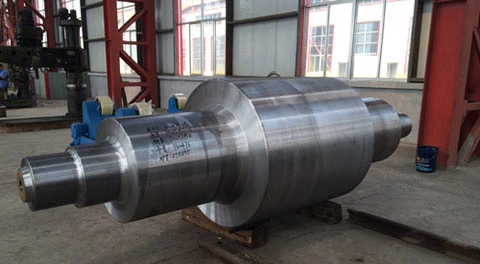
The necessary processing process countermeasures are described in the strengthening measures mentioned below:
1. Effectively select the temperature, heating rate, and insulation time of the raw material entering the furnace
For special carbon steel with low thermal conductivity (especially for a few inches of raw material), the temperature should be raised at low speed in the furnace or heated and insulated for a period of time between 700 and 900. It is not allowed to heat up immediately in the furnace at the initial forging temperature, and then raise the temperature to the initial forging temperature or to a high-temperature furnace at the initial forging temperature; The insulation time at the initial forging temperature depends on carbon steel and is usually several times longer than alloy tool steel.
Other types of aluminum, magnesium, copper, and carbon steel with higher thermal conductivity than steel can be immediately heated in a high-temperature furnace, with an accelerated heating rate and a moderate reduction in insulation time.
Technical Countermeasures for Forging Special Carbon Steel Castings
2. Properly select the deformation level
For special carbon steel forgings with high level of fine grain strengthening, severe macroeconomic shrinkage of ingots and forgings, low plastic deformation, and wide critical deformation range, strict control should be exercised over each heat and even the deformation level arranged for each stroke of machinery and equipment during the entire forging process. Excessive deformation level will lead to forging cracking, while too small deformation level will fall into the deformation zone, causing some crystals to grow and the mechanism to be uneven.
3. Strictly control the final forging temperature
For the characteristics of high work hardening temperature and obvious strain hardening tendency of special carbon steel forgings, the final forging temperature must be increased or greatly increased. The final forging temperature of some carbon steels can even reach hg720, which is about 400 higher than the final forging temperature of carbon structural steels and high alloy steels.
4. Efficiently selecting the working speed of forging equipment
For some special carbon steels that are sensitive to the corresponding strain rate and slow in work hardening, four column hydraulic press, mechanical equipment punch and screw press with low loading rate should be selected as far as possible for forging; For sharp steel with severe honeycomb like breakages, in order to completely crush the two types of breakages, a forging hammer with high working speed and strong impact force should be selected for calcination.
5. Effectively selecting forging equipment
For some special carbon steels with high deformation resistance, very slow work hardening and high final forging temperature, when compared with the same specification of broken indium and high alloy steel components, it is necessary to select those that can be seen or have a load 3 times larger? Forging equipment 5 times or larger.
In the same situation, smaller machinery and equipment should be selected for molybdenum, magnesium, and steel with low deformation resistance, as well as carbon steel.
6. Carry out safety protection for hair embryos
For the characteristics that the surface layer of special carbon steel is very easy to produce carbon steel element dilution layer and bilization layer or digest and absorb harmful substances during the whole process of heating, under the standard, it should be heated in the maintenance atmosphere, or safety protection coating should be selected to carry out safety protection for the burrs, such as coating the burrs with laminated glass safety protection lubricant.
7. Conduct bi-directional wetting of hair germ and grinding tools
For the characteristics of special carbon steel, such as high deformation resistance, large kinetic energy (load) of necessary machinery and equipment, and narrow calcination temperature range, in addition to basic lubrication of grinding tools, safety protection lubrication of rough billets is also solved to avoid friction and temperature drop of rough billets as much as possible, in order to reduce the required tonnage of machine equipment. It is proposed to use laminated glass safety protection lubricant to carry out safety protection and lubrication for burrs during die forging of high-temperature alloy, titanium metal and stainless steel plates,
8. Try to select the technological process calcined under pressure crustal stress
For the characteristics of high fine grain strengthening level and low plastic deformation of special carbon steel, it is proposed to select as far as possible the technological process of extrusion forming, closed die satin and closed upsetting and extrusion forming in the flat forging machine under compressive crustal stress conditions.
9. 'Strike while the iron is hot'
For the characteristics of high final forging temperature and narrow calcination temperature range of special carbon steel, it is required that the forging worker is proficient in actual operation and agile in response. Every stage from the release of raw materials, transmission to calcination must be fast , striving to reduce calcination time as much as possible, surpassing the goal of "striking while the iron is hot".
10. Strictly abide by the heating rules and regulations of special tools and grinding tools
For the characteristics of high final forging temperature, narrow calcination temperature range, and low thermal conductivity of special carbon steel, which are sensitive to grinding tool quenching, all clamping and grinding tools that come into contact with steel castings must strictly follow the requirements for heating.


